


How to Interpret Conflicting Tarot Cards in One Reading
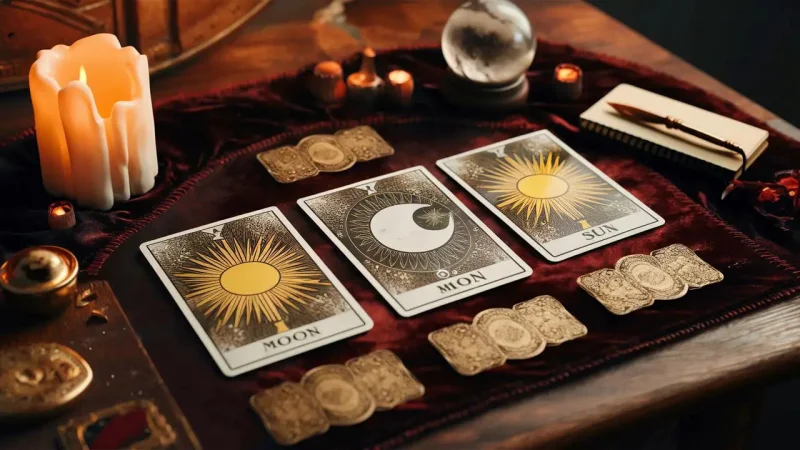
Need Guidance On Your Problems?
Consult With The Best Online Psychics


How to Interpret Conflicting Tarot Cards in One Reading
Have you ever drawn tarot cards that seem to tell two completely different stories? One card suggests love and happiness, while another points toward heartbreak or distance. One appears to encourage action, while the next seems to recommend patience. When this happens, it is natural to wonder whether you have misunderstood the cards or whether your reading makes sense at all.
The good news is that conflicting tarot cards do not automatically mean your reading is wrong. Tarot cards can represent different sides of a situation, competing emotions, challenges, choices, or stages of a process. Learning how to interpret conflicting tarot cards can help you understand the complete spread instead of focusing on each card separately.
In this guide, you will learn why tarot cards sometimes appear contradictory, how to interpret their combined meanings, and how to approach confusing readings with greater confidence.
What Does It Mean When Tarot Cards Conflict?
Conflicting tarot cards are cards that appear to communicate different or opposing themes within the same reading. For example, one card might symbolize progress, while another represents delay. One may suggest emotional connection, while another highlights disappointment or uncertainty.
These differences do not necessarily cancel each other out. They may encourage you to consider several aspects of the question rather than expecting one simple answer.
Imagine drawing The Sun and the Nine of Swords in a relationship reading. The Sun is commonly associated with warmth, clarity, and optimism, while the Nine of Swords is often linked with worry and sleepless thoughts.
Together, these cards could invite you to explore a situation that has positive aspects but also creates anxiety. They might reflect a person's hopes alongside their fears, or a relationship that looks promising while still containing unresolved concerns.
The interpretation depends on the question, the positions of the cards, and the surrounding context.
Why Do Tarot Cards Give Conflicting Messages?
Several factors can make a tarot spread appear confusing. Understanding these factors can help you avoid jumping to conclusions.
1. Each Card Represents a Different Side of the Situation
Real-life situations are rarely made up of one emotion or one possibility. You can care about someone and still feel hurt by their behavior. You can want a new opportunity and feel nervous about accepting it.
Tarot symbolism can be used to explore these different sides.
For example, the Two of Cups may represent connection and partnership, while the Three of Swords is commonly associated with emotional pain. Together, they might encourage reflection on the relationship between affection and disappointment.
Rather than deciding that one card must be correct and the other incorrect, consider what each card contributes to the overall story.
2. The Cards Have Different Positions in the Spread
The position of a tarot card can significantly influence its interpretation.
In a past, present, and future spread, a difficult card in the past position may describe an earlier challenge, while a more positive card in the future position may symbolize a possible direction for growth.
Consider the Five of Cups in the past position and the Star in the future position. The Five of Cups is often associated with disappointment or grief, while the Star represents hope and renewal.
Read together, these cards can suggest a reflective story about moving through disappointment toward renewed hope. They do not guarantee that a particular outcome will occur, but they offer a useful way to explore change.
Always check what each position is intended to represent before deciding that two cards contradict each other.
3. The Cards Highlight Different Emotions
Sometimes a reading feels contradictory because the situation contains mixed emotions.
For example, the Lovers may symbolize attraction, values, or an important choice, while the Hermit often represents solitude, introspection, or taking time to reflect.
In a love reading, this combination could raise questions about balancing closeness with personal space. It might invite you to consider whether a connection leaves enough room for individual needs.
The cards do not prove what another person feels privately. Instead, use their symbolism to examine the relationship dynamics and the information you can observe in real life.
4. Reversed Cards Add Another Layer of Meaning
Reversed tarot cards can make an interpretation more nuanced. Depending on the reader's approach and the context, a reversal may suggest an internal experience, a delay, an imbalance, or a challenge connected to the upright meaning.
For example, the upright Chariot is often associated with direction and determination. Reversed, it may be interpreted as scattered effort, difficulty maintaining control, or uncertainty about the next step.
If the Chariot appears alongside a card associated with patience, the combination might encourage you to reconsider whether pushing harder is actually helping.
Remember that reversed cards do not have one universally accepted meaning. Choose an approach that makes sense for your reading and apply it consistently.
How to Interpret Conflicting Tarot Cards Step by Step
When your tarot cards appear to disagree, follow this simple method rather than immediately drawing more cards.
Step 1: Return to Your Original Question
Read the question you asked before interpreting the spread.
A question about what you can learn from a relationship is different from a question about how to communicate more clearly. The same cards can offer different reflections depending on the subject.
If your original question was vague, rewrite it in a more focused way. For example, instead of asking, "What will happen in my love life?" you could ask, "What should I understand about the communication in this relationship?"
A clear question gives the reading a more useful direction.
Step 2: Interpret Each Card According to Its Position
Identify the purpose of every position in the spread. Is the card describing the current situation, a challenge, an underlying concern, advice, or a possible outcome?
Do not apply a general card definition without considering the role it plays in the spread.
A card associated with endings may describe something that needs to change rather than predicting a literal ending. A card associated with waiting may recommend reflection rather than suggest that nothing will ever happen.
Step 3: Identify What the Cards Share
Before focusing on their differences, look for common themes.
Do the cards both relate to emotions, decisions, communication, change, or personal growth? Do their images suggest a similar issue even if their traditional meanings differ?
For example, the Moon and the High Priestess are both commonly associated with intuition, hidden information, or what is not yet fully understood. Their appearance together may encourage careful reflection instead of rushing toward a conclusion.
Shared themes can help you build a coherent interpretation.
Step 4: Explore the Difference Instead of Ignoring It
Ask yourself what each card adds to the situation.
If one card suggests confidence and another suggests fear, consider how confidence and fear might coexist. If one card represents movement and another represents stillness, explore whether the situation calls for action in one area and patience in another.
You can ask:
-
What does the first card highlight?
-
What different perspective does the second card introduce?
-
Could both themes be present at the same time?
-
What practical question does this combination raise?
The aim is not to force every card into a positive message. It is to understand the relationship between the symbols.
Step 5: Read the Cards as One Connected Story
Avoid treating every card as a separate answer. Try combining their meanings into one or two sentences that respond to your original question.
For example, the Three of Swords followed by the Six of Swords might be interpreted as moving through emotional difficulty toward a calmer state.
The first card describes the challenge, while the second offers a possible direction or development. This is one symbolic interpretation, not a guaranteed prediction.
Once you can explain the spread in plain language, check whether the interpretation fits the actual question and the positions you assigned.
Step 6: Write Down Your Interpretation Before Drawing Again
When a reading feels confusing, take a moment to record the cards, their positions, and your initial thoughts.
Stepping away briefly can help you notice connections that were difficult to see when you first drew the cards.
If you still need clarification, consider drawing one additional card with a specific purpose, such as exploring what you may be overlooking. Avoid repeatedly drawing cards until you receive the answer you prefer, as this can make the reading harder to interpret.
Examples of Conflicting Tarot Card Combinations
Looking at specific combinations can help you understand how opposing themes may work together.
The Sun and the Nine of Swords
Possible themes: optimism and anxiety.
The Sun is commonly associated with joy, openness, and clarity. The Nine of Swords often represents worry, stress, or overthinking.
Together, they may invite you to examine why a situation that has positive elements still causes concern. Are you worried about losing something good? Is uncertainty making it difficult to enjoy the present?
This combination encourages you to acknowledge both what is working and what needs attention.
The Lovers and the Hermit
Possible themes: connection and personal reflection.
The Lovers can symbolize attraction, alignment, or an important choice. The Hermit often represents solitude and inner reflection.
In a relationship reading, this combination may raise questions about balancing intimacy with independence. It can encourage honest communication about personal space, shared values, and individual needs.
It should not automatically be interpreted as proof that someone wants a relationship or intends to withdraw.
The Tower and the Star
Possible themes: disruption and renewal.
The Tower is often associated with sudden change, disruption, or the collapse of an existing structure. The Star is associated with hope, healing, and renewed perspective.
Together, these cards can form a symbolic story about finding a new direction after a difficult change.
Rather than treating the combination as a promise that everything will improve immediately, consider what rebuilding, learning, or seeking support might look like in your actual circumstances.
The Chariot and the Hanged Man
Possible themes: determination and patience.
The Chariot commonly represents focus, direction, and forward movement. The Hanged Man is associated with pausing, surrendering control, and seeing things differently.
This pairing may encourage you to distinguish between a situation where decisive action is useful and one where a different perspective is needed first.
The practical question is not simply whether to move forward or wait. It is whether your current approach is helping you make progress.
The Two of Cups and the Three of Swords
Possible themes: connection and emotional pain.
The Two of Cups is often associated with mutual connection and partnership, while the Three of Swords represents heartbreak, disappointment, or painful truths.
Together, they may prompt reflection on a relationship that includes affection but also unresolved hurt. Consider whether communication, trust, or expectations need attention.
If you are exploring this combination in a new relationship, you may also enjoy our guide to the Two of Cups and its symbolic meaning for new romance.
Read it here: https://kenuba.com/blog/what-does-the-two-of-cups-mean-for-a-new-relationship
What Should You Do When a Tarot Reading Still Feels Confusing?
Sometimes a spread remains difficult to interpret even after you have examined the positions and card combinations. You do not need to force an answer immediately.
Try these practical steps:
Take a short break. Return to the reading later with a fresh perspective.
Simplify the message. Write one sentence describing the main theme of each card, then look for a connection between them.
Check your assumptions. Ask whether you are favoring a particular interpretation because it matches what you hope or fear will happen.
Look at real-life evidence. Use the reading as a reflection tool, not as a replacement for direct communication, observable behavior, or careful decision-making.
Avoid endless clarification pulls. More cards do not necessarily create more clarity. Sometimes the most useful conclusion is that the situation remains uncertain.
If you are unsure how to approach an unclear tarot interpretation, you can also read our related guide:
What Should You Do When a Tarot Reading Confuses You?
https://kenuba.com/blog/what-should-you-do-when-a-tarot-reading-confuses-you
Can a Tarot Reader Help You Understand Conflicting Cards?
A tarot reader can offer a different perspective on card positions, symbolic combinations, and the question behind your spread. A conversation may help you organize your thoughts and consider interpretations you had not noticed.
The best approach is to choose a reader who explains their reasoning, respects your boundaries, and does not pressure you into repeated readings or additional payments.
If you want to explore your cards with an advisor, visit Kenuba to browse available readers and compare their profiles and specialties:
You can also explore Kenuba through our apps:
Customer App: Find advisors and explore available reading services.
https://play.google.com/store/apps/details?id=com.kenuba.user
Advisor App: For spiritual advisors interested in the Kenuba platform.
https://play.google.com/store/apps/details?id=com.psychicspanel.astrologer
Choose a reading that helps you reflect on your situation, understand your options, and make decisions based on your own judgment. No tarot spread can guarantee a future outcome or establish another person's private thoughts as fact.
Frequently Asked Questions
What does it mean when tarot cards contradict each other?
Conflicting cards may represent different aspects of a situation, competing emotions, challenges, or stages of change. Their interpretation depends on the original question, card positions, and the relationship between the symbols.
Should I ignore a tarot card that gives a negative message?
No. Rather than ignoring a difficult card or assuming it predicts something bad, consider what its symbolism may invite you to examine. It could represent a concern, an obstacle, a boundary, or an issue that needs attention.
Which tarot card should I trust when two cards disagree?
There is no universal rule that one card always takes priority over another. Start with the spread positions and original question, then interpret the cards together. Avoid choosing a card simply because its meaning is more reassuring.
Do reversed tarot cards always mean the opposite?
No. Depending on the reader's method, a reversed card may suggest an internal process, delay, imbalance, blocked expression, or a different aspect of the upright meaning. Context is important.
Should I draw another card when my tarot reading is confusing?
You can draw a clarifying card if you have a specific question that remains unanswered. However, repeatedly drawing more cards can add confusion, especially when you are searching for a preferred result.
Can conflicting tarot cards predict a breakup or reconciliation?
Tarot cards cannot reliably guarantee a breakup, reconciliation, or another person's future choices. You can use their symbolism to reflect on relationship patterns, communication, expectations, and the decisions available to you.
How can beginners become better at reading tarot combinations?
Start with the original question, learn the purpose of each spread position, identify shared themes, and interpret the cards as one connected story. Keep notes on your interpretations and practice explaining the message in simple, everyday language.
Final Thoughts
Learning how to interpret conflicting tarot cards in one reading is about developing a more thoughtful approach to symbolism. Cards that appear to disagree may highlight different emotions, competing priorities, or parts of a situation that deserve closer attention.
Begin with your question, respect the positions of the cards, explore both similarities and differences, and look for a connected interpretation rather than forcing a single answer.
Most importantly, allow tarot to support reflection rather than make decisions for you. Real-life evidence, honest communication, and your own judgment remain essential.
If you want to explore different perspectives on your tarot questions, browse Kenuba advisors at https://kenuba.com/advisors or get started with the Kenuba Customer App:
https://play.google.com/store/apps/details?id=com.kenuba.user
For spiritual advisors, the Kenuba Advisor App is available here:
https://play.google.com/store/apps/details?id=com.psychicspanel.astrologer
Explore your questions with curiosity, patience, and an open mind.